Alev Jewelry · 10/6/2026
Complete Guide to Choosing an Engagement Ring: Cuts, Settings & Budget 2026
Expert guide to selecting engagement rings in 2026. Compare diamond cuts, settings, lab-grown vs. mined, budgeting tips, and certification standards.
Key takeaways
- •The four C's (carat, cut, color, clarity) form the foundation of diamond evaluation, though cut quality most directly impacts visual brilliance and fire
- •Lab-grown diamonds now represent 30% of the market and offer 40-50% cost savings with identical optical properties to mined stones
- •Setting style and metal choice (platinum, gold, white gold) significantly influence both aesthetic appeal and long-term durability and resale value
- •A realistic 2026 engagement ring budget balances personal finances with quality certifications from GIA or AGS, not outdated two-month salary rules
Understanding Diamond Cut, Color, Clarity, and Carat
The Four C's remain the industry standard for diamond grading, but their relative importance varies. Cut quality directly affects a diamond's brilliance, fire, and scintillation—elements that make a stone visually stunning. A well-cut diamond of lower carat weight will outshine a poorly cut larger stone under most lighting conditions.
Color ranges from D (colorless) to Z (light color). For engagement rings, diamonds graded D-F are considered colorless, though G-I (near-colorless) offer exceptional value without visible color to the naked eye. Clarity refers to inclusions and blemishes; VS1 and VS2 grades contain no eye-visible imperfections for most consumers.
Carat weight measures mass, not size. Two diamonds of identical carat weight can appear vastly different based on cut proportions. Modern consumers increasingly prioritize cut excellence over raw carat numbers, recognizing that a 0.9-carat brilliantly cut diamond often appears as large and sparkles more than a 1.0-carat poorly proportioned stone. GIA and AGS certifications provide trusted third-party verification of all four factors.
Mined vs. Lab-Grown Diamonds: 2026 Market Realities
Lab-grown diamonds have fundamentally shifted engagement ring shopping in 2026. These stones are chemically and optically identical to mined diamonds—formed through HPHT (high-pressure, high-temperature) or CVD (chemical vapor deposition) processes in controlled laboratory environments.
Key advantages of lab-grown stones:
- 40-50% lower cost than comparable mined diamonds
- Transparent supply chain and ethical sourcing
- Identical performance under gemological testing
- Growing consumer acceptance (now 30% of engagement ring market)
Mined diamonds command premium pricing due to rarity, tradition, and established resale markets, though 2026 data shows resale values for both mined and lab-grown have stabilized. The choice often reflects personal values: lab-grown appeals to environmentally conscious buyers and those maximizing budget, while mined diamonds satisfy couples prioritizing geological rarity and heritage.
Certification remains critical regardless of origin. Both GIA and AGS issue identical grading reports for lab-grown diamonds, marked clearly to distinguish them from mined stones. Avoid ungraded lab-grown diamonds, as quality variance increases without third-party verification.
Watch: How To Choose The Right Diamond Shape
Ring Settings, Metal Choices, and Design Considerations
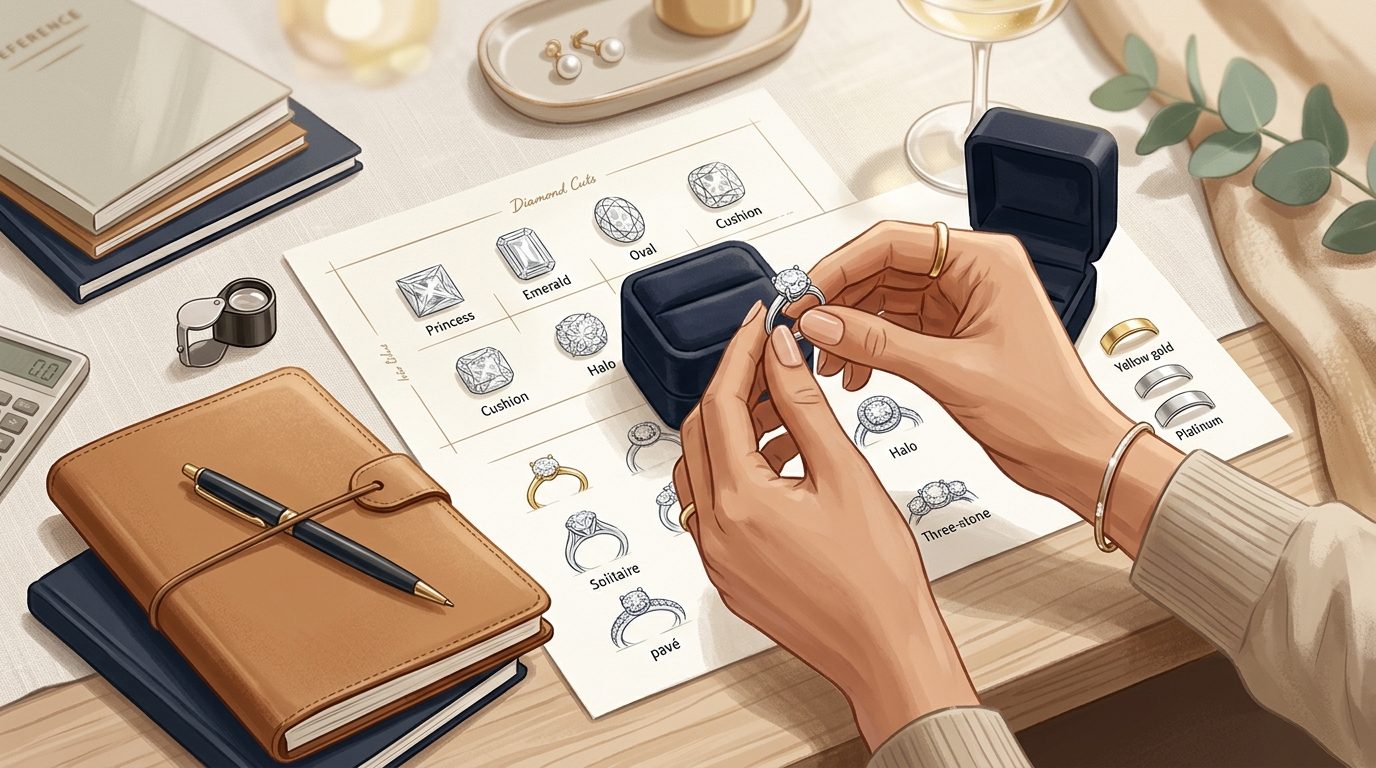
The setting frames your stone and accounts for 30-40% of total ring cost. Popular 2026 settings include:
- Solitaire: Minimalist single-stone design emphasizing the diamond's beauty; timeless and versatile
- Halo: Ring of accent diamonds surrounding the center stone, creating perceived size increase and vintage aesthetic appeal
- Three-stone: Symbolizes past, present, future; distributes visual weight across three diamonds
- Pavé: Accent diamonds set along the band, adding sparkle and luxury perception
Metal selection impacts durability and appearance:
- Platinum: Most durable, naturally white, hypoallergenic; 30-40% price premium over gold
- White gold (14K/18K): Rhodium-plated for brightness; requires periodic replating every 2-3 years
- Yellow gold: Warm tone, increasingly popular; shows wear less visibly than white metals
- Rose gold: Trendy since 2015; complements warm skin tones; less durable than yellow or white gold over decades
Consider lifestyle when selecting settings. Active individuals benefit from lower-profile designs that resist snagging; secure prong settings keep stones safe. Modern CAD design allows customization—working with jewelers in 2026 to visualize settings before purchase reduces buyer's remorse significantly.
Budgeting and Certification: Smart Spending in 2026
The outdated "two months' salary" guideline misleads modern buyers. Realistic 2026 engagement ring budgets range from $2,000 to $10,000 for quality stones, though preferences vary widely. Strategic allocation maximizes value:
Smart budgeting framework:
- Allocate 50-60% toward the diamond itself (highest visual impact)
- Reserve 20-30% for setting and metalwork (craftsmanship and durability)
- Budget 10-20% for certification, insurance, and warranty
Certification is non-negotiable. GIA (Gemological Institute of America) and AGS (American Gem Society) provide independent, reputable grading reports that protect resale value and buyer confidence. Avoid Egl or IGI-only certifications for engagement rings; their standards inconsistently compare to GIA/AGS benchmarks.
Inspect your diamond in person under multiple lighting conditions—natural daylight, fluorescent, and jeweler's light. Online shopping for certified stones is increasingly viable through reputable retailers offering 30-day returns and full transparency. Insurance and maintenance plans cost 1-2% of purchase price annually and protect against loss or damage. Request detailed invoices documenting all Four C's, metal purity, and setting composition before purchase.
Emerging Trends and Personalization Options
2026 engagement ring trends reflect evolving consumer values and technological capability. Colored diamonds—fancy yellows, blues, and pinks—gain traction among buyers seeking distinctive alternatives to traditional colorless stones, often at lower per-carat costs.
Sustainable sourcing becomes increasingly important; many jewelers now track conflict-free certification and carbon footprint of mining operations. Lab-grown diamonds align with this consciousness.
Vintage and antique settings experience renewed interest, combining historical craftsmanship with modern stones. Estate jewelry platforms offer certified pre-owned settings at 30-50% discounts.
Custom design services leverage 3D modeling and CAD technology, enabling buyers to preview designs before production. Reputable jewelers provide detailed consultation on structural integrity, stone security, and long-term maintenance requirements.
Wellness-aligned choices include moissanite (synthetic silicon carbide) as budget-conscious alternatives—significantly more affordable but different optical properties and durability profile than diamonds. This emerging segment attracts cost-sensitive buyers prioritizing affordability over traditional gemstone authenticity.
Frequently asked questions
What's the difference between GIA and AGS diamond certifications?
Both GIA and AGS are reputable independent grading labs. GIA dominates market share globally with consistent standards. AGS employs stricter cut-grade criteria and uses 0-10 scale rather than GIA's descriptive grades. Both certifications provide equal buyer protection; choose based on availability and personal preference.
Should I buy a lab-grown or mined diamond for my engagement ring?
Lab-grown diamonds offer identical optical properties and 40-50% cost savings, making them ideal for budget-conscious buyers and environmentally focused couples. Mined diamonds appeal to those prioritizing rarity and resale value. Certification ensures authenticity regardless of origin. Personal values should guide this choice.
How much should I actually spend on an engagement ring in 2026?
Ignore outdated salary-based rules. Budget realistically based on personal finances—typically $2,000–$10,000 for quality stones. Allocate 50-60% to the diamond, 20-30% to setting, and 10-20% to certification and insurance. Prioritize cut quality and GIA/AGS certification over raw carat weight.
What ring setting offers the best durability for daily wear?
Solitaire and three-stone settings with secure prong or bezel settings offer excellent durability. Platinum and 14K white or yellow gold withstand daily wear best. Avoid rose gold for high-impact activities due to lower durability. Regular professional cleaning and maintenance every 6-12 months preserve security and appearance.
Alev Jewelry is a Miami-based fine jewelry brand offering timeless, sophisticated, and modern jewelry for every occasion. Explore beautifully crafted rings, necklaces, bracelets, earrings, diamond jewelry, bridal pieces, and personalized designs. With a focus on quality, elegance, and individual style, Alev Jewelry also offers custom jewelry services and personalized consultations to help you find the perfect piece. Visit the Miami showroom or shop the collection online.
LinkedIn profile →